
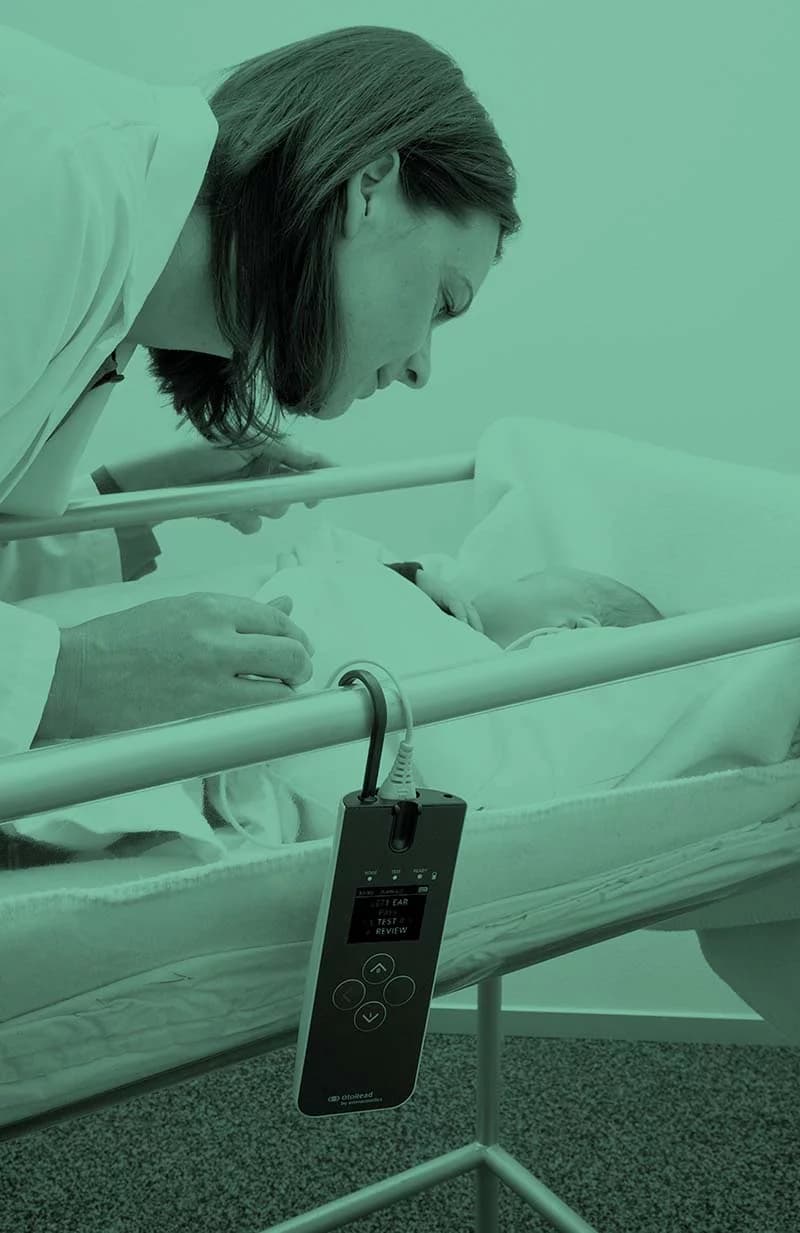
OAE devices
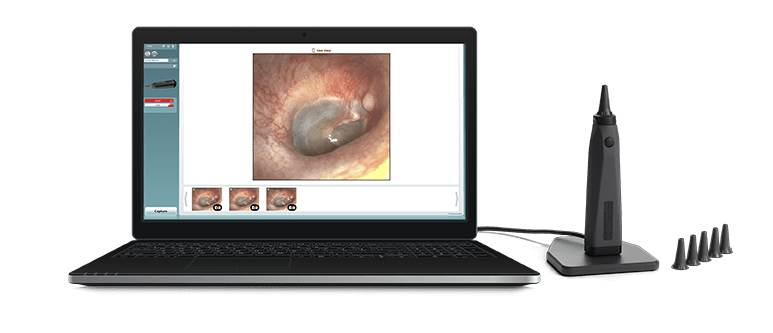
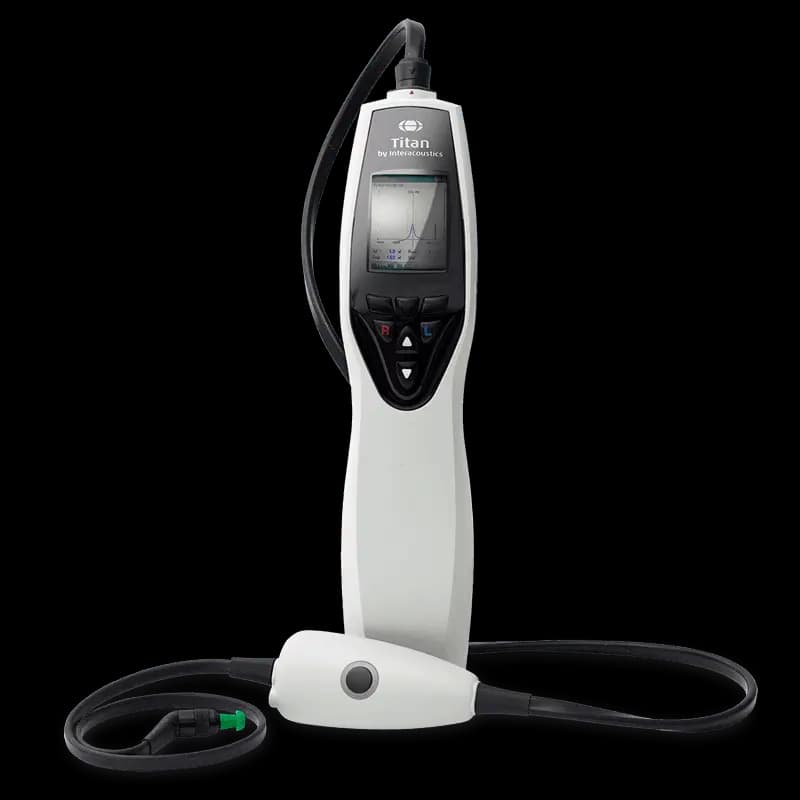

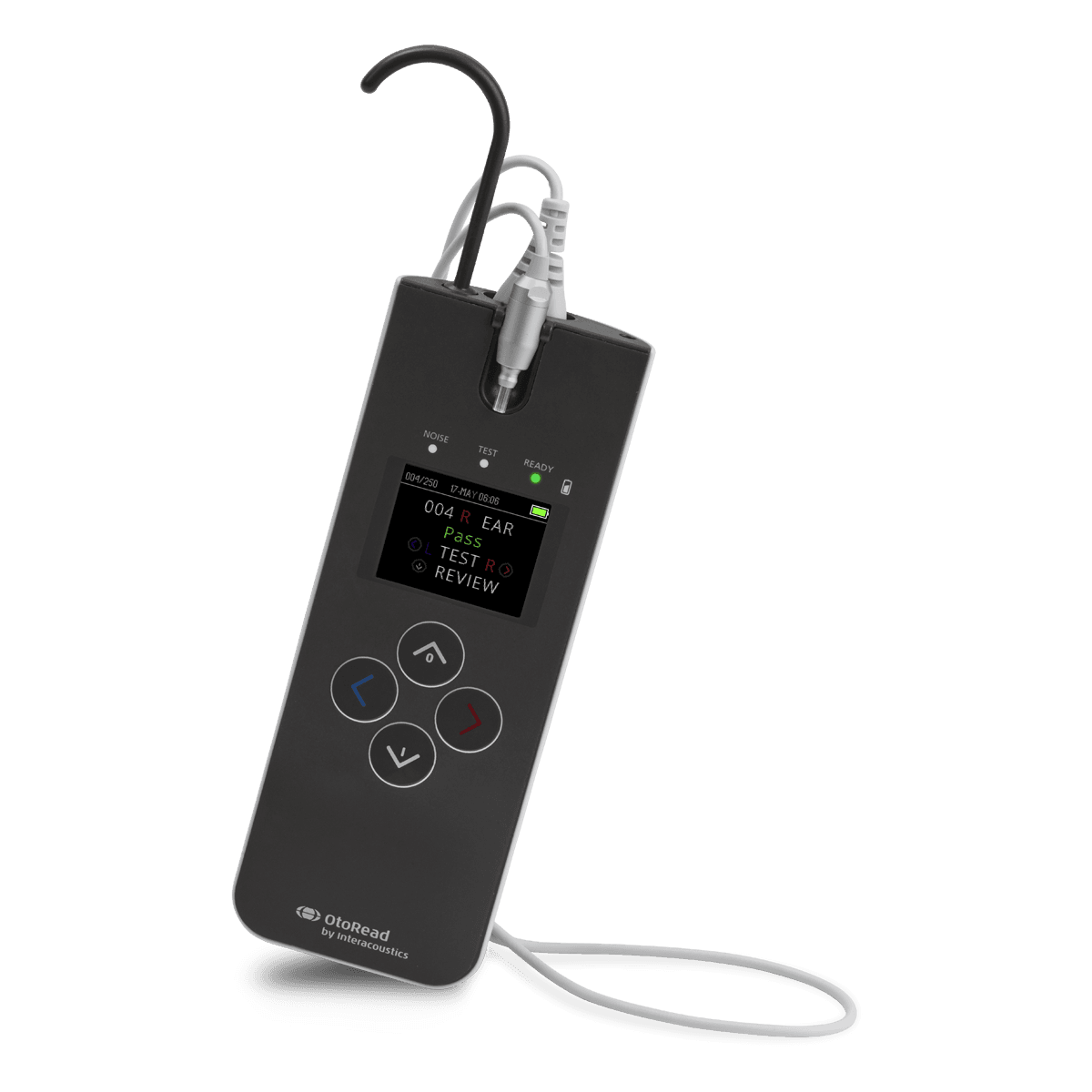


Frequently asked questions
Otoacoustic emissions (OAEs) are sounds that are generated by movement of the outer hair cells in a healthy functioning cochlea in response to external stimuli.
Distortion product otoacoustic emissions (DPOAEs) are evoked by the simultaneous presentation of two pure-tones or primaries, referred to as f1 and f2. Because the cochlea is non-linear in nature, distortion occurs at various places along the cochlea during stimulus presentation. During a DPOAE test, various pairs of the stimuli are presented to the ear and the largest corresponding distortion product is measured at the frequency expressed as 2f1-f2.
Transient evoked otoacoustic emissions (TEOAEs) are most often evoked using a repeated broadband click stimulus. They are recorded during the brief intervals between the stimulus presentations that activate a wide area of the basilar membrane.
There are many reasons for choosing one OAE test method over the other. Some prefer the TEOAE method when trying to conduct a quick OAE screening on a child while others find DPOAEs more suitable when assessing adult patients. Either way, both methods assess outer hair cell function and provide important information about the status of the cochlea.
Most popular product training.
Accessing Saved Client Records
Learn how to access saved client records with the AC40 clinical audiometer.
Acceptable Noise Level (ANL) Test
Learn how to perform the acceptable noise level (ANL) test with the Affinity Compact.
Acceptable Noise Level (ANL) Test
Learn how to perform the acceptable noise level (ANL) test with the Affinity 2.0 device.
Acoustic Reflex Testing
Learn how to perform acoustic reflex testing with the AA222.
Contact your local distributor
Our world-wide experts and distributors can help you find the best solution for you and your clinic. They also know what products are available in your market. Fill out the form and your local distributor will contact you with more information.
Distributors
Purchase from one of our trusted distributors.
Support
Need product training? Visit our training site to find answers.