
Academy & Training
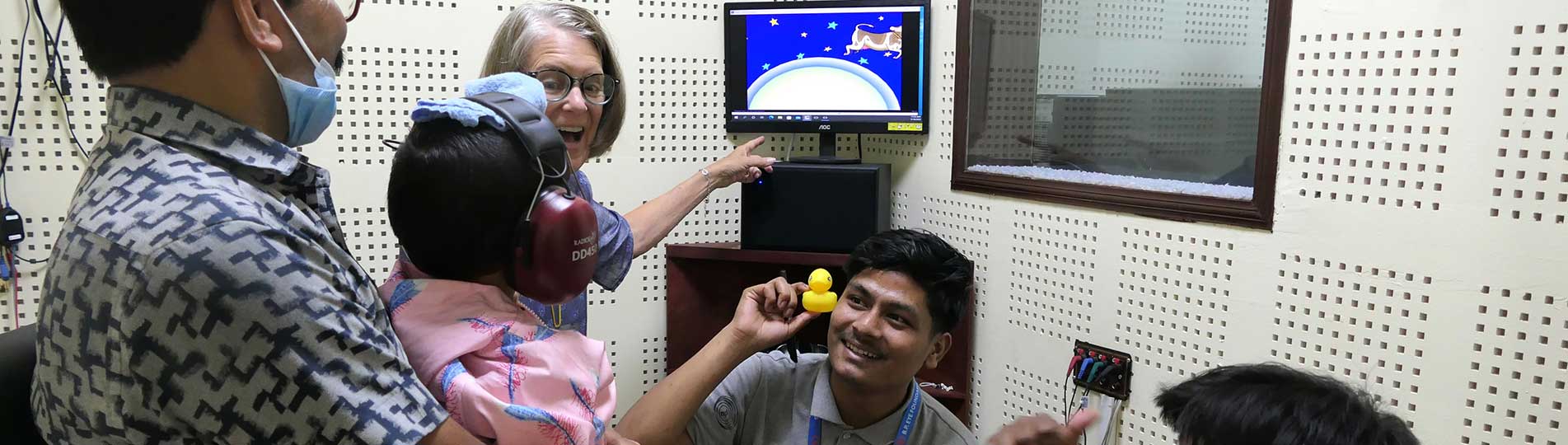
How to mark an ECochG waveform: Prof John Ferraro explains
John Ferraro, Ph.D., FASHA, FAAA, explains how to mark an electrocochleogram waveform in order to calculate the SP/AP amplitude and SP/AP area ratios.
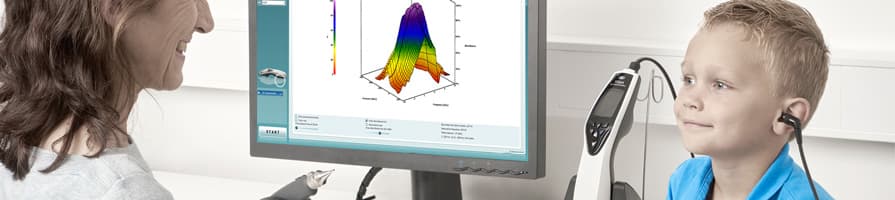
Foundations & Clinical Applications of Wideband Tympanometry
Welcome to this course on wideband tympanometry, presented by Dr Gabrielle R. Merchant, AuD., PhD., CCC-A, and Dr Hammam AlMakadma, AuD., PhD., CCC-A.
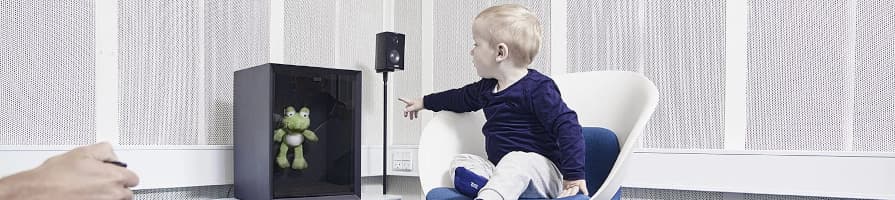
Optimizing Pediatric Behavioral Assessments: Standardization, Documentation and Quality Assurance
This course examines the importance of standardized behavioral assessment protocols and robust documentation practices in pediatric hearing assessments.
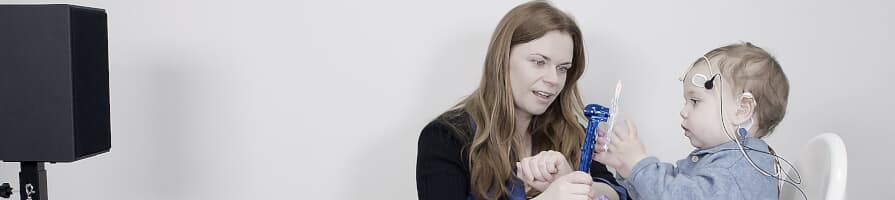
Using cortical assessments for the management of ANSD
This course explores how cortical auditory evoked potential measurements can be used to inform the management of patients with ANSD. Access the course here.
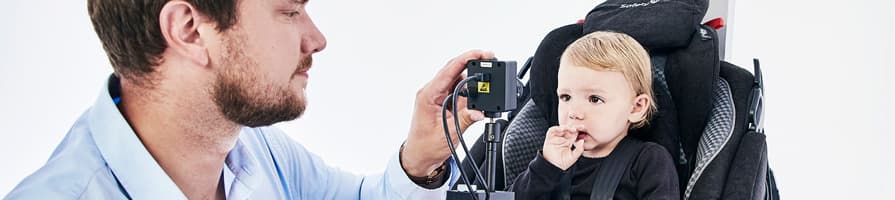
Paediatric Vestibular Assessment in Children with Hearing Impairment
This course examines the critical role of vestibular assessment in the management of infants and children with identified hearing impairment. Access course now.
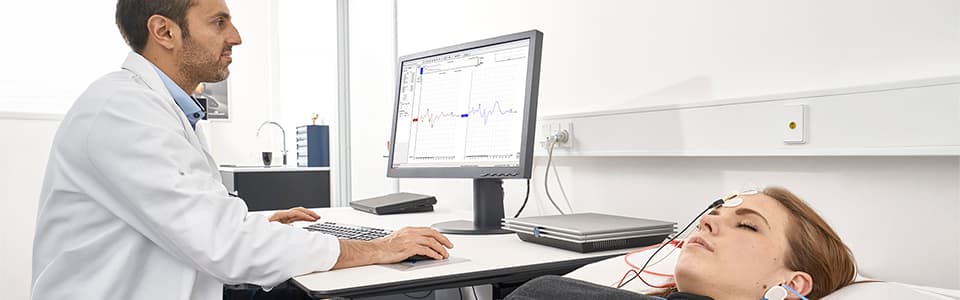
Mastering Neurological ABR
This course is designed to equip participants with the theoretical and practical understanding of how to perform a range of neurological ABR assessments.
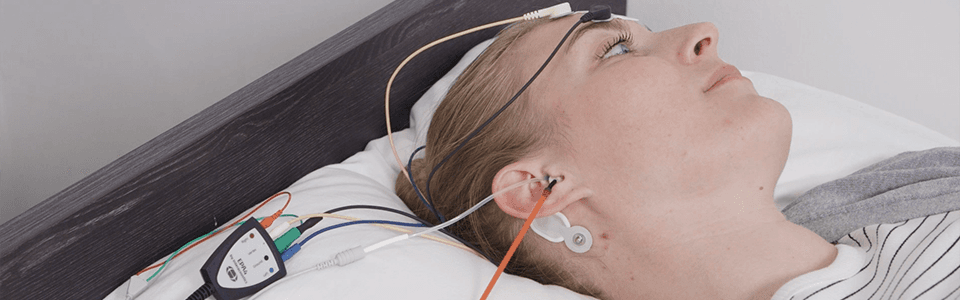
Mastering Electrocochleography (ECochG)
This course is designed to equip you with the theoretical and practical understanding of how to perform Electrocochleography (ECochG). Register here.
Pediatric (PED) Noise
Learn about pediatric (PED) noise, which offers a suitable and attention-grabbing alternative to warble tones for hearing threshold estimation in children.
Short Increment Sensitivity Index (SISI) Test
The short increment sensitivity index (SISI) test assesses the ability to detect very small changes in stimulus intensity at suprathreshold levels. Read more.
Alternate Binaural Loudness Balance (ABLB) test
The alternate binaural loudness balance (ABLB) test is an assessment of whether a patient perceives loudness differently in each ear. Read more about ABLB here.
High Frequency Audiometry
Standard audiometry up to 8 kHz isn't enough anymore. Learn why you should include high frequency audiometry up to 20 kHz in your test battery. Read more here.
Masking Level Difference (MLD)
Learn the theoretical background behind the masking level difference (MLD) test, its test procedure, results interpretation, and more. Read more.
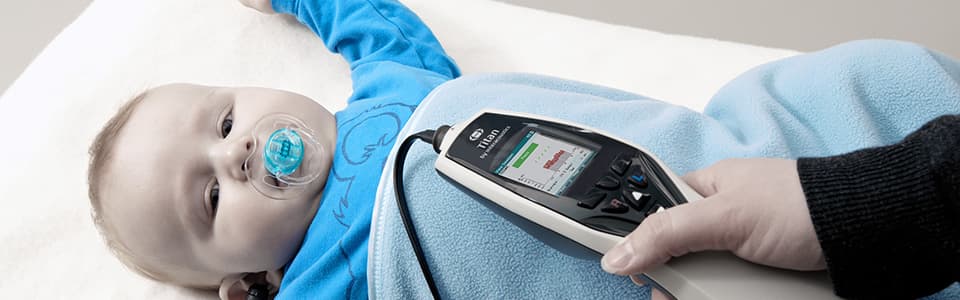
Mastering Transient Evoked Otoacoustic Emissions (TEOAEs)
In this course, you will learn what transient evoked otoacoustic emissions (TEOAEs) are, how to perform a TEOAE measurement, and more. Register here.
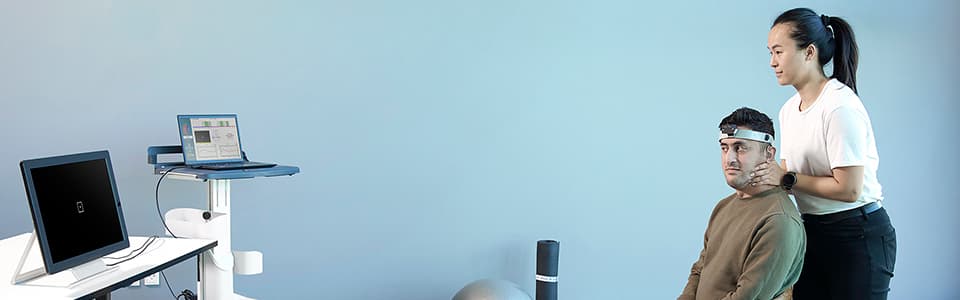
From Diagnosis to Discharge: Utilizing the DATA model for comprehensive care of the dizzy patient
This online course provides an introduction into the DATA (Diagnose, Assess, Train, Assess) model for dizzy patients. Click here to take the course.
Stenger test: Assessing non-organic hearing loss
In this article, you'll learn about the Stenger test, including when to perform it, interpret Stenger test results, and more. Click here to read the article.
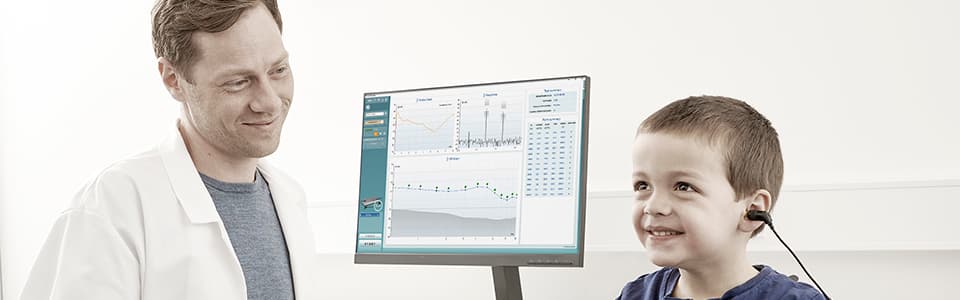
Mastering Distortion Product Otoacoustic Emissions (DPOAEs)
In this course, you'll learn how to master Distortion Product Otoacoustic Emissions (DPOAEs), including their clinical utility, parameters, and more.