
How to perform frequency lowering verification

By Interacoustics

How to determine if frequency lowering should be applied

1. Launch Affinity/Callisto Suite.

2. Ensure an audiogram is entered.

3. Navigate to REM module.

4. Fitting prescription setting will automatically pop up, adjust as needed, then click 'Okay'.

5. Make sure to go into settings for the measurements and activate percentile analysis (Figure 1).
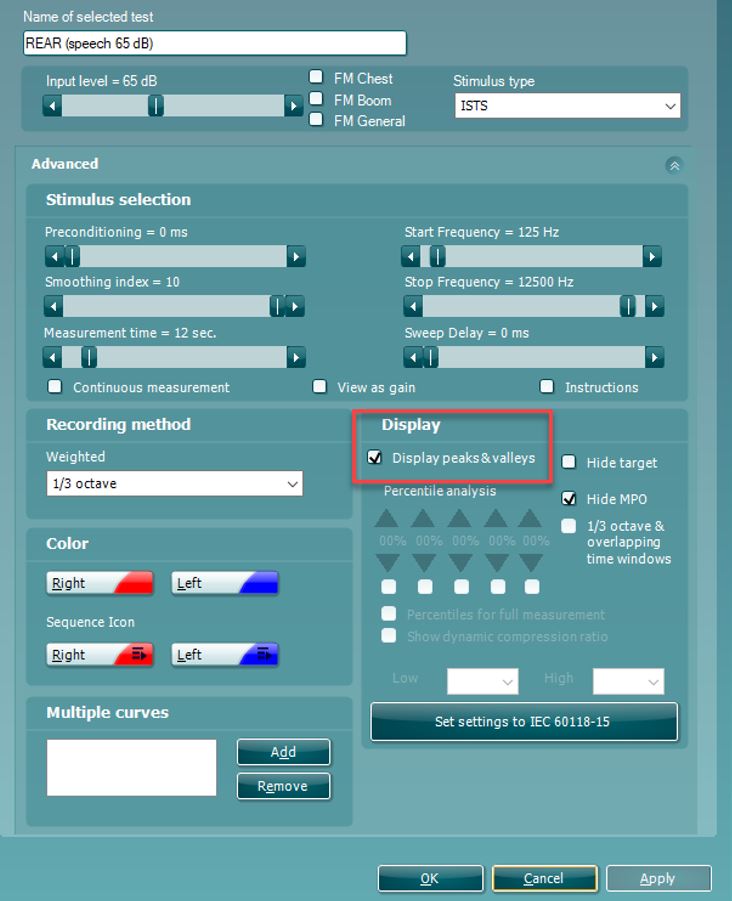
Figure 1: Enabling percentile analysis.

6. Perform Real Ear Measurements as per usual and fit your hearing aids to target:

  • Make sure to run the 'Calibrate for Open Fit' with the /ss/ stimuli along with the usual ones.
  • You need to measure an LTASS at 65 dB SPL as minimum (Figure 2).
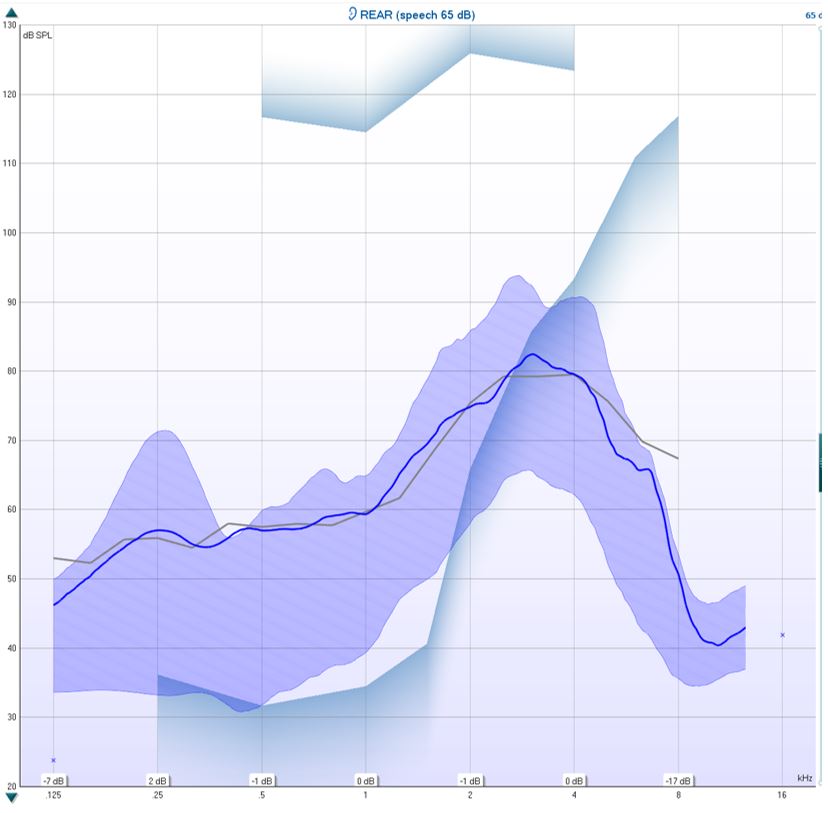
Figure 2: LTASS 65 dB measurement.

7. Determine the MAOF value. You determine your MAOF value from the point at which the LTASS crosses threshold to the point at which the peaks of speech crosses threshold (Figure 3).
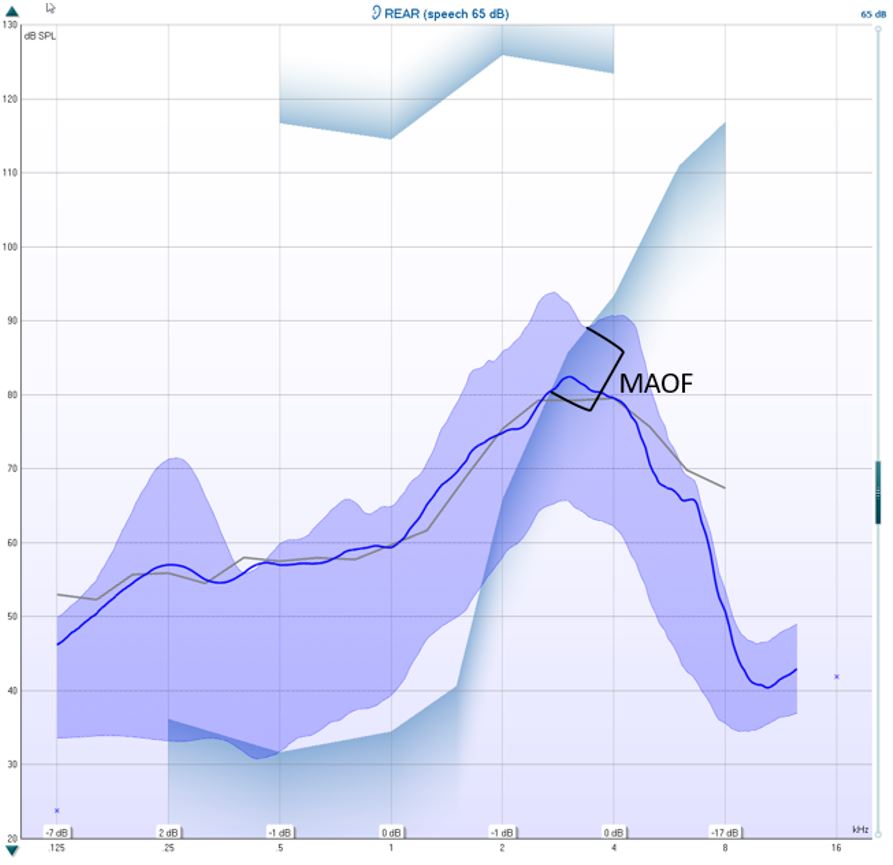
Figure 3: Determining the MAOF value.

In the example above, the MAOF has been marked, and your calculated MAOF value is at where the upper speech percentile crosses the threshold. In this example, it would be 3400 Hz (Figure 4).
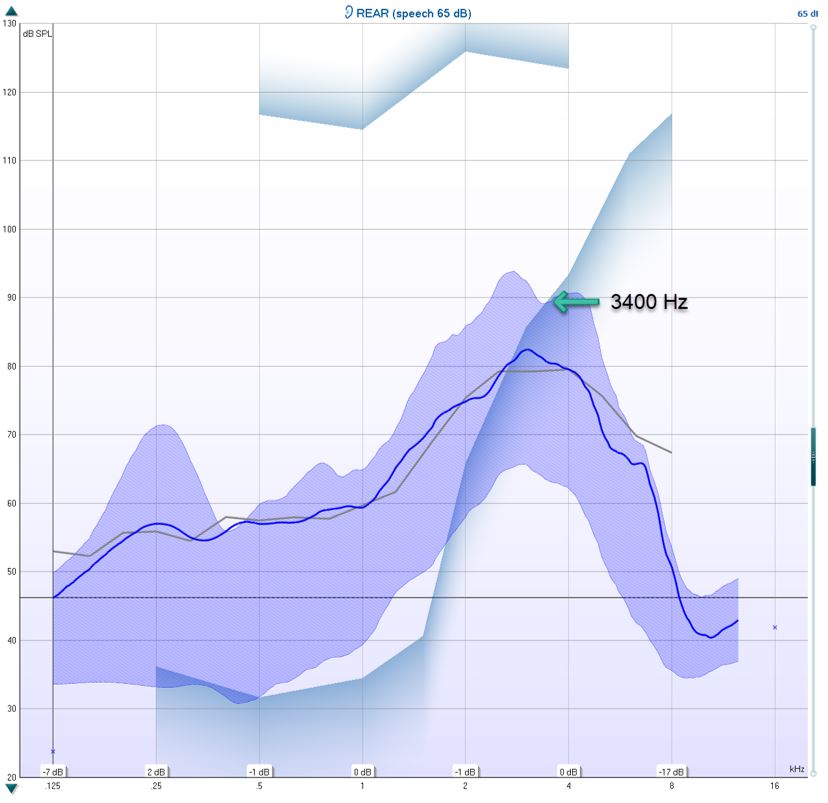
Figure 4: Calculated MAOF value.

8. Optional: hide target in the measurement settings (Figure 5).
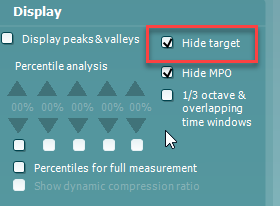
Figure 5: Hide target setting.

9. Measure the performance of the hearing aid with the frequency lowering feature off using the /ss/ stimulus (Figure 6).
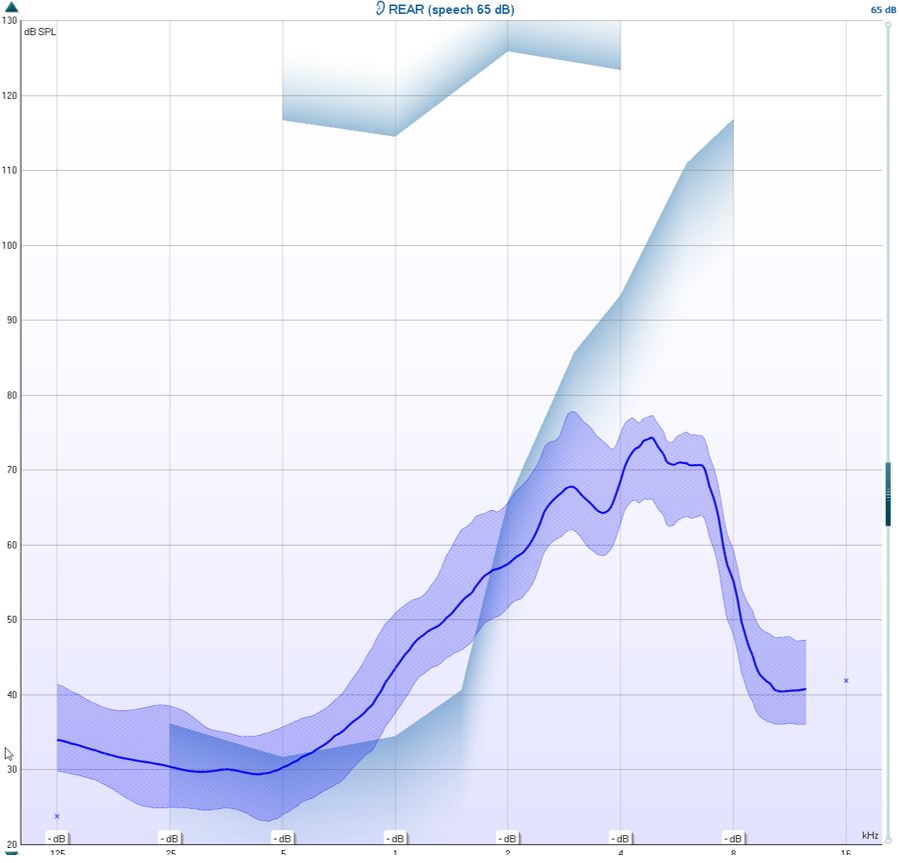
Figure 6: Hearing aid performance without frequency lowering.

10. Determine if the calibrated /ss/ stimulus is audible and falls within the MAOF range for an LTASS measured at 65 dB. If not, the candidacy criterion for frequency lowering has been met.

How to verify frequency lowering feature

1. Measure the performance of the hearing aids with frequency lowering feature on using the /SS/ stimulus (Figure 7).
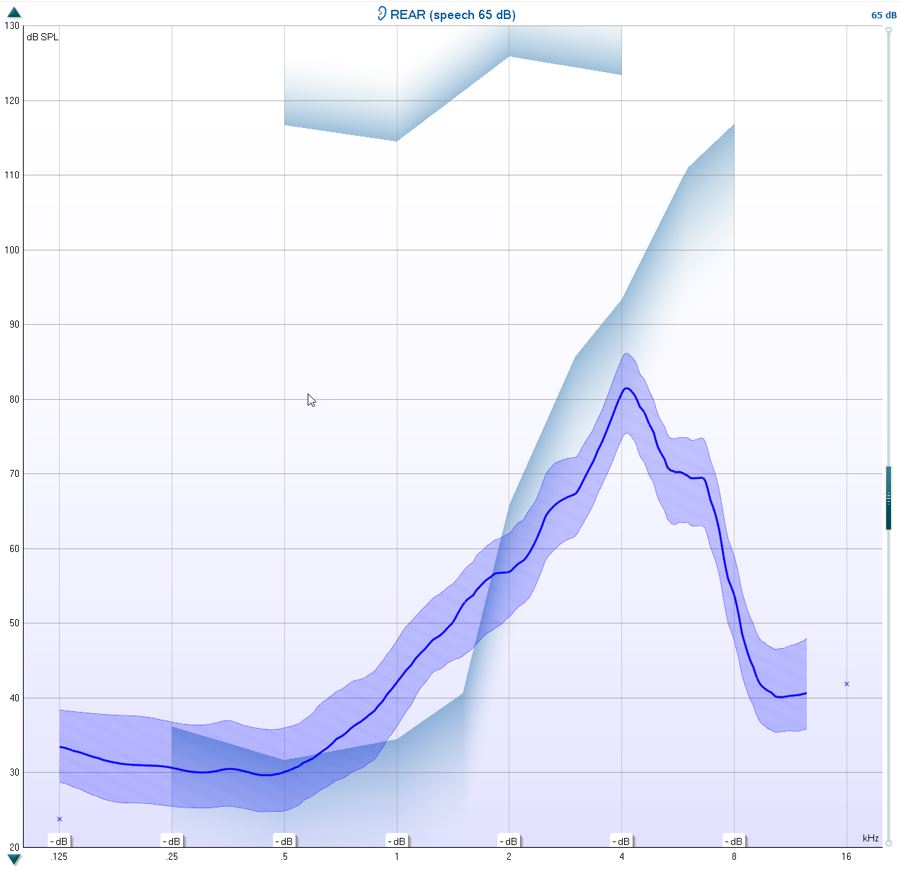
Figure 7: Hearing aid performance with frequency lowering.

2. Evaluate if it falls within the MAOF range at 65 dB SPL.

3. Fine-tune the frequency lowering so the /SS/ falls within the MAOF range (Figure 8).
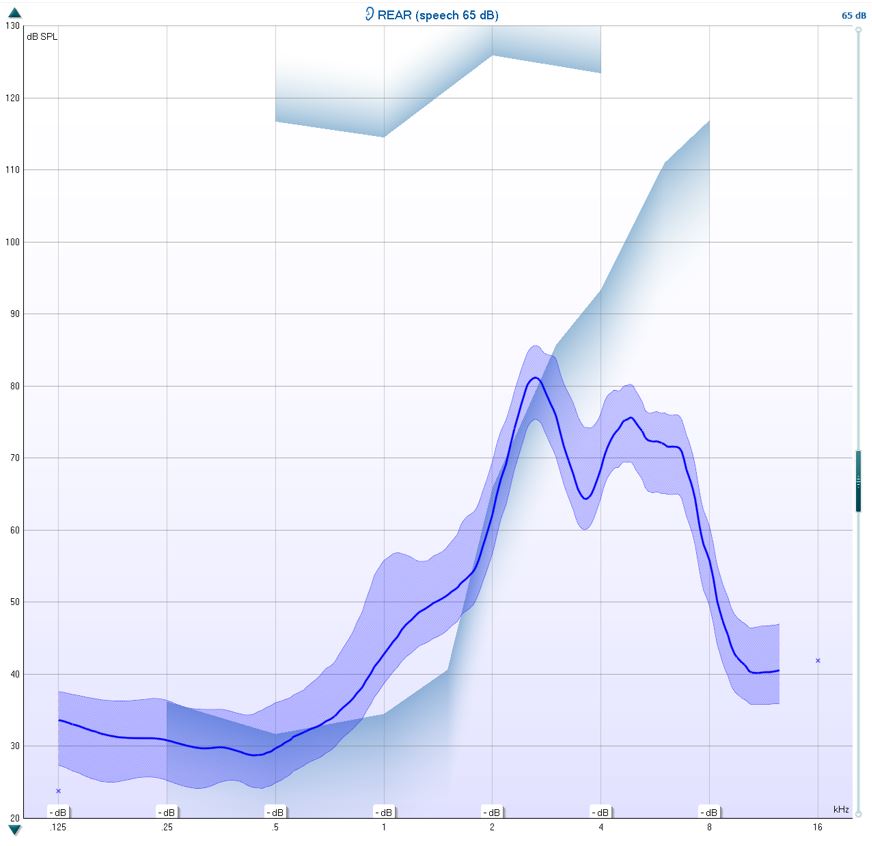
Figure 8: Fine-tuned frequency lowering.

4. You can choose to run the test with the /SH/ stimulus to check the patient's ability to differentiate between the /SS/ and the /SH/ stimuli.

5. It is also beneficial to run the /SS/ at 55 dB SPL to ensure the softer stimulation is audible.

Presenter

Interacoustics

Available Training

Acceptable Noise Level (ANL) Test

Learn how to perform the acceptable noise level (ANL) test with the Affinity Compact.

Interacoustics2026-10-02

AC440 Protocol Setup

Learn how to set up protocols in the Affinity Compact's audiometry module.

Interacoustics2026-10-02

Adult Hearing Aid Verification

Learn how to verifiy hearing aids in adults with the Affinity Compact, using real ear measurements (REM).

Interacoustics2026-10-02

Affinity Compact: A product introduction

This video provides an introduction to and overview of the Affinity Compact.

Interacoustics2026-10-02

Affinity Compact: Features and functions

This video provides an overview of the Affinity Compact's features and functions.

Dennis Mistry2026-10-02

Ambient Noise

Worried about noise in your audiometry recordings? Affinity Compact has an Ambient Noise feature, which allows you to monitor for noise in the test environment.

Interacoustics2026-10-02

IA-AMTAS

Learn about the IA-AMTAS feature in Affinity Compact for automated audiometry testing.

Interacoustics2026-10-02

Basic Audiometry

Learn how to do basic audiometry with the Affinity Compact.

Interacoustics2026-10-02

BKB-SIN speech-in-noise test

In this quick guide, you will learn how to use the BKB-SIN speech-in-noise test provided with the Interacoustics Affinity Compact audiometer. Read more.

Interacoustics2026-10-02

How to perform CROS and BiCROS fitting

Learn how to fit CROS and BiCROS hearing aids with the Affinity Compact.

Interacoustics2026-10-02

Customized Printout Setup

Learn how to customize printouts with the Affinity Compact.

Interacoustics2026-10-02

Delta Values

To make hearing aid fitting easier, the Delta Values feature calculates the difference between your measurement curve and your target curve. Learn more here.

Interacoustics2026-10-02

How to perform FM transparency verification

In this Affinity Compact quick guide, you'll learn how to perform FM transparency verification. Read more.

Interacoustics2026-10-02

Free Field Adjustment

Learn about Affinity Compact's free field adjustment feature, which ensures your free field speaker is properly calibrated, no matter the sound environment.

Interacoustics2026-10-02

Hearing Aid Transition (HAT)

Learn about the hearing aid transition test, which allows you to copy tuning preferences from hearing aids which you do not have previous sessions stored for.

Interacoustics2026-10-02

HIT440 Protocol Setup

Learn how to set up protocols in the Affinity Compact's hearing instrument testing module.

Interacoustics2026-10-02