How to add a new patient in OtoAccess ® Database
Presenter

Presenter
Learn how to measure auditory late responses (ALRs) with cortical evoked response audiometry (CERA) using the Eclipse evoked potentials system. Read more.
Learn how to perform the auditory steady-state response (ASSR) test with the Eclipse device.
Learn how to perform auditory brainstem response (ABR) testing with the Eclipse device.
Learn how to perform electrocochleography with the Eclipse evoked potentials device, including electrode placement, labeling waveforms, and much more.
Learn what Bayesian weighting is and when and why you should use it (and when it may be less relevant to use it). Click here to learn more.
Learn how to measure cochlear microphonics with the Eclipse device.
Learn how to measure cervical vestibular-evoked myogenic potentials (cVEMPs) with the Eclipse device.
Learn how to perform a daily system check on the Interacoustics Eclipse.
Learn how to measure the electrical auditory brainstem response (eABR) with the Eclipse device.
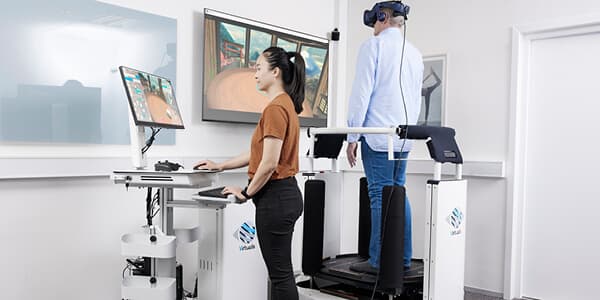
This resource is designed to give you a thorough understanding of the Eclipse, so you can get up and running quickly and make the best possible measurements.
Discover electrode tips and tricks while using your Interacoustics Eclipse.
Learn about the Fmp and Residual Noise metrics for auditory brainstem response (ABR) testing and why they are so important. Click here to learn more.
Learn how to customize your auditory brainstem response (ABR) protocol with the Interacoustics Eclipse.
Learn how to improve your evoked potential recordings, including skin preparation and tips to reduce noise.
Learn how to make changes to a saved session with the Interacoustics Eclipse.
Learn how to how to mark auditory brainstem response (ABR) waveforms with the Interacoustics Eclipse.
In this article, you will learn five things you can do in less than five minutes to identify children at risk for having a vestibular disorder. Read more.

This course provides an overview of the basics of performing the auditory steady state response (ASSR) test. Access the ASSR course here.
This video provides a real-life demonstration of performing an auditory brainstem response (ABR) test in a newborn baby, via air conduction. Watch video here.
The CE-Chirp® family is a family of acoustic stimuli used in evoked potential testing, primarily auditory brainstem response (ABR) testing. Learn more.
Reducing electrode impedance is important for auditory brainstem response (ABR) testing. Learn what electrode impedance is and how to reduce it in this piece.
The normal hearing level (nHL) is the sound level of a short duration signal. It is often higher than the estimated behavioral hearing level (eHL). Learn more.