How to perform the Brandt-Daroff Exercise
By Interacoustics
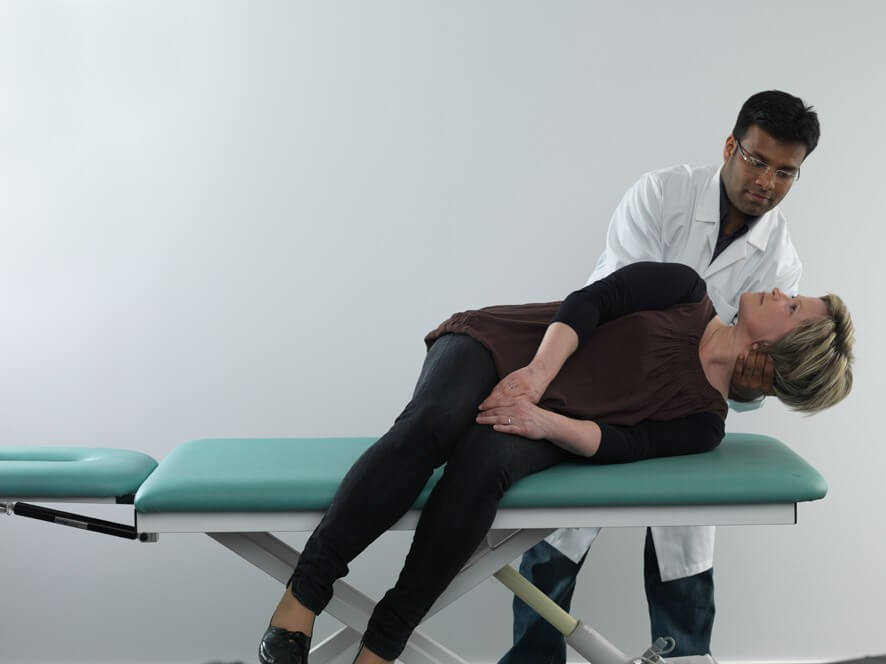
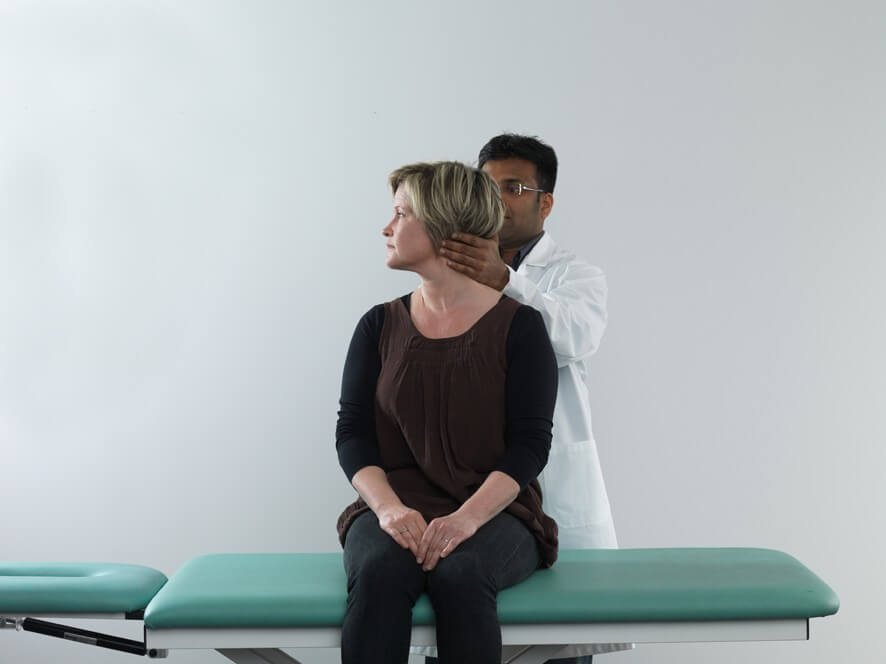
Female patient in black clothes sitting on examination table with legs dangling off the edge of the table. Male clinician stood behind the patient, and is turning her head about 90 degrees toward the right. Female patient in black clothes lying on her left side on examination table with legs dangling off the edge of the table. Male clinician stood behind the patient, and is turning her head about 90 degrees toward the right.
First part of the exercise being shown with assistance
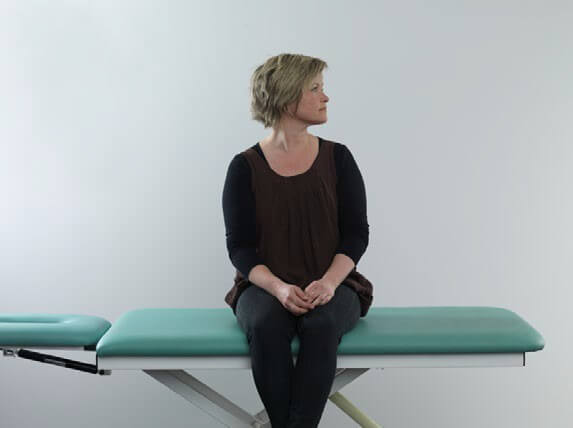
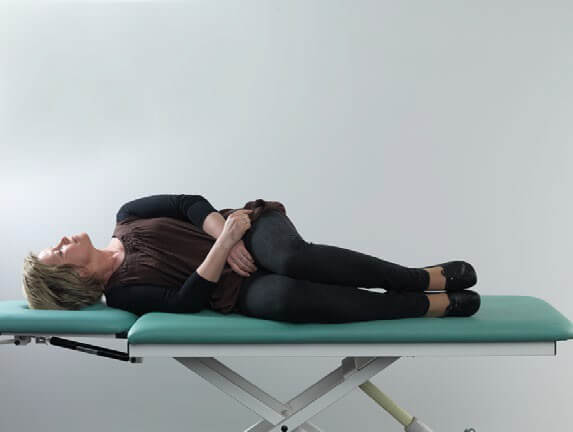
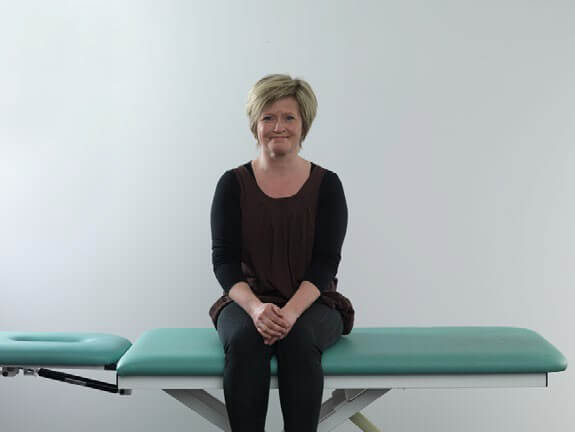
Woman in black clothes sitting on examination table with legs dangling off the edge of the table. She has her head turned about 90 degrees toward the left. Female patient in black clothes lying on her right side on examination table. She has her head turned about 90 degrees toward the left. Woman in black clothes sitting on examination table with legs dangling off the edge of the table.
Second part of the exercise shown without assistance

Helpful hints

  • Before recommending any form of positioning maneuver, it is important to ascertain whether the patient has current or past injuries of the neck or spine
  • If possible neurological symptoms occur during the execution of positioning maneuvers, discontinue the procedure immediately and refer for the patient for a neurological evaluation. These symptoms might include blurred vision, numbness, weakness of the arms or legs or confusion
  • In order for the exercise to be successful, the patient must remain in each position until the vertigo subsides plus an additional 30 seconds and the patient must perform all 10 revolutions of the This is time consuming and often challenging for the patient due to intense vertigo. Therefore, it is important that the patient is educated on what to expect during the exercise and has agreed to full compliance
  • It is practical, if possible, to have another person there to assist the dizzy person with the exercise
  • Without the patient's commitment to full compliance, performing the Brandt-Daroff exercises might be counter-productive in that otoconia may travel to different parts of the vestibular system and cause a worsening of symptoms
  • You should instruct the patient that if they are doing the exercise properly, their symptoms will likely lessen in severity with each repetition. However, they should always do the full set of 10 complete revolutions

Procedure

  1. Begin with the patient sitting upright on the edge of his bed
  2. The patient will turn his head 45o toward either side, or as far as is comfortable
  3. The patient moves from sitting position to side-lying position while maintaining the 45o angle of the head (the patient's nose should be pointed upward)
  4. The patient lies in this position until his symptoms have subsided plus an additional 30 seconds
  5. The patient returns to the sitting position and waits for symptoms to subside plus an additional 30 seconds
  6. The patient should turn his head in the opposite direction and repeat the exercise

** The above description constitutes one revolution of the exercise. It is recommended that the patient perform ten complete revolutions of the exercise, three times daily.

References

  • Brandt T, Daroff RB. Physical therapy for benign paroxysmal positional vertigo. Arch Otolaryngol 1980 Aug;106(8):484-485
  • Fife TD, et al. (2008). Practice parameter: Therapies for benign paroxysmal positional vertigo (an evidence-based review). Report of the Quality Standards Subcommittee of the American Academy of Neurology, 70(22): 2067-2074.

Presenter

Interacoustics

Available Training

How to perform the Active Head Rotation test

Learn how to perform the active head rotation (AHR) test in the VisualEyesTM software.

Dr Michelle Petrak2026-10-02

How to perform the Advanced Dix-Hallpike test

In this guide, you will learn how to perform the Advanced Dix-Hallpike using the VisualEyesTM videonystagmography (VNG) system.

Dr Michelle Petrak2026-10-02

How to perform calibration procedures

In this guide, you will learn how to calibrate the VisualEyesTM videonystagmography (VNG) system.

Dr Michelle Petrak2026-10-02

How to perform the Caloric test

Learn how to perform the caloric test with videonystagmography (VNG) equipment.

Interacoustics2026-10-02

How to perform Cervical Gaze testing

Two additional gaze positions are now available in VisualEyesTM 525 as an option to include in your test battery: Center Body Left and Right. Learn more.

Dr Liz Fuemmeler2026-10-02

How to perform the Dix-Hallpike test

Learn how to perform the Dix-Hallpike test, including precautions, patient instructions, the step-by-step test procedure, results interpretation, and more.

Interacoustics2026-10-02

How to perform the Dynamic Visual Acuity (DVA) test

Learn how to perform the dynamic visual acuity (DVA) test in the VisualEyesTM software.

Dr Michelle Petrak2026-10-02

How to perform the Epley Maneuver

Learn how to perform the Epley Maneuver for treatment of posterior canal BPPV. Includes a step-by-step procedure with images and helpful hints. Read more.

Interacoustics2026-10-02

How to use VisualEyesTM EyeSeeCam

In this guide, you will learn how to use the EyeSeeCam vHIT software within the VisualEyesTM videonystagmography (VNG) system.

Dr Michelle Petrak2026-10-02

How to perform the Functional Vision Head Impulse Test (fvHITTM)

The Functional Vision Head Impulse Test (fvHITTM) provides functional information on how clearly the patient sees in response to quick head impulses. Read more.

Dr Liz Fuemmeler2026-10-02

How to perform the Gaze test

Learn how to perform the gaze test with videonystagmography (VNG) equipment.

Interacoustics2026-10-02

How to perform the Gaze Stabilization Test (GST)

Learn how to perform the Gaze Stabilization Test (GST) in the VisualEyesTM software. Click here to read more.

Dr Michelle Petrak2026-10-02

How to perform the Gufoni Maneuver

Learn how to perform the Gufoni Maneuver in this short guide. Includes a step-by-step procedure with images and helpful hints. Read more.

Interacoustics2026-10-02

How to set up and troubleshoot monitors for oculomotor and optotype tests

In this quick guide, you will learn how to set up and troubleshoot monitors for oculomotor and optotype tests in the VisualEyesTM software. Read more.

Dr Liz Fuemmeler2026-10-02

How to use keyboard shortcuts in VisualEyesTM

VisualEyesTM has several software functions that are available through a computer keyboard. These allow for the user to access quick buttons for easy navigation.

Dr Liz Fuemmeler2026-10-02

How to perform the Lateral Head Roll test

Learn how to perform the lateral head roll (LHR) test with the VisualEyesTM software.

Dr Michelle Petrak2026-10-02